
Tank vs. Tankless in Plano: Side-by-Side Comparison
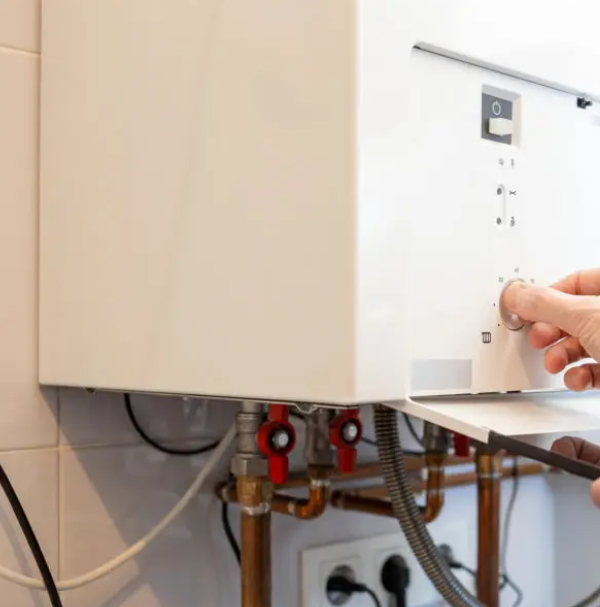
Rather than arguing for one system, this comparison lines the two up feature by feature so you can see where each one actually wins for a Plano household — and where the difference barely matters.
Side-by-side, category by category
| Category | Storage tank | Tankless |
|---|---|---|
| How it works | Keeps 40–75 gallons hot around the clock | Heats water on demand as it flows, no storage |
| Upfront project | Usually a like-for-like swap in the existing spot | Often needs new venting, a larger gas line and condensate drainage |
| Winter performance | Recovery slows somewhat as incoming water gets colder | Flow rate drops more noticeably — size against winter inlet temps, not summer ones |
| Simultaneous use | Strong flow to multiple fixtures until the tank runs low | Continuous supply, but capped at a flow rate that must be sized for your household |
| Typical lifespan | 8–12 years | Often considerably longer with regular descaling |
| Floor space | Needs standing floor clearance | Wall-mounted, frees up floor space |
| Maintenance need | Periodic flush and anode check | Periodic descaling via isolation valves |
Where NTMWD water hardness matters to both
Plano draws from the North Texas Municipal Water District, and the mineral content is enough that both system types need attention over time: sediment collects in a tank, scale narrows the heat exchanger in a tankless unit. Whichever you choose, the maintenance schedule matters more to long-term reliability than the choice itself.
Where the two setups actually differ for Plano homes
- 1970s east-Plano ranch homes with the heater in the garage: a tank swap is usually the simpler path; a tankless conversion is doable but adds gas-line and venting work.
- 1990s west-Plano two-story homes with an attic install: tankless can be attractive for space, but attic mounting means paying close attention to condensate routing and a proper drain pan either way.
- Townhomes and smaller lots: reclaiming floor space by going tankless is often worth more here than in a house with a spare utility closet.
Quick answers
Which costs less upfront? A tank replacement, in nearly every case.
Which runs cheaper month to month? Tankless and heat-pump tanks generally use less energy, though the payoff period depends on your household's usage.
Which lasts longer? Tankless, on average, provided it gets descaled on a regular schedule.
Which is the safer bet if I might sell in a few years? A tank replacement, permitted and documented, is usually the lower-risk, lower-cost choice for a shorter time horizon.
Describe your home's setup — fuel type, location of the unit, and household size — in our free quote form and we'll price both options side by side. See also our guide to replacement cost factors.
More From the Blog
- Water Heater Replacement Cost: A Plano Buyer's Checklist
- Repair or Replace? A Plano Homeowner's Decision Guide
- Water Heater Sizing: A Plano Q&A
- How Long Will My Water Heater Last? A Plano Timeline
- Gas or Electric? Answering It for Your Plano Home
- Water Heater Leaking? Follow This Order of Operations
Get a Free Water Heater Quote
Describe your water heater situation and we will send you a quote with no obligation.
Get Your Free Water Heater Quote
Tell us what you need and we will call you back — no cost, no commitment.