
Water Heater Repair in Plano, TX
Most water heater trouble in Plano falls into a handful of predictable patterns. Find your symptom below to get a sense of what's failing before a technician ever shows up.
Get Your Free Water Heater Quote
Tell us what you need and we will call you back — no cost, no commitment.
Symptom → Likely Cause
| What you're seeing | What's usually behind it |
|---|---|
| No hot water, gas unit | Pilot or igniter out, failed thermocouple, dead gas control valve |
| No hot water, electric unit | Tripped high-limit reset button, failed upper element, tripped breaker |
| Runs out faster than it used to | Sediment eating into tank volume, failed lower element, worn dip tube |
| Popping or rumbling from the tank | Water boiling under a hardened sediment layer — very common with NTMWD's mineral content |
| Water pooling near the base | Drain valve, relief valve or fitting leak (repairable) vs. a corroded tank shell (not) |
| Pilot won't stay lit | Failing thermocouple/flame sensor, dirty orifice, blocked combustion air screen |
| Scalding or unpredictable temperature | Drifted or failed thermostat, poor contact against the tank wall |
| Relief valve dripping or discharging | Excess pressure, thermal expansion, or an overheating tank — never plug it |
Noisy tank? Start with a water heater flush. Water on the floor? See water heater leak repair.
What a Technician Actually Checks
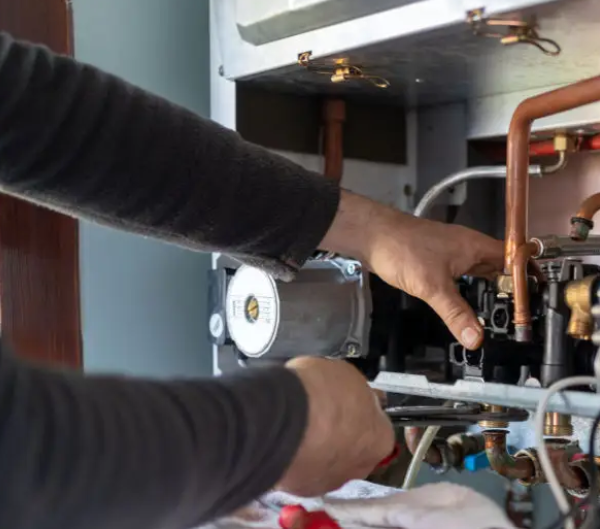
- Confirms the symptom and checks fuel supply or breaker/power
- Reads tank temperature and compares it to the thermostat setting
- On gas units: inspects the burner, flame pattern and venting
- On electric units: tests both elements and both thermostats
- Checks the relief valve, drain valve and supply connections for leaks
You should walk away with three things: what failed, what fixing it involves, and whether that repair is actually worth it given the unit's age.
A Quick Repair-or-Replace Gut Check
- Under 8 years old, one part failed — repair it.
- 8–12 years old, this is the second or third repair — get a replacement number before you say yes to another repair.
- Leaking from the tank itself, any age — replace, full stop.
- Repair quote is close to half of a new install — replacement usually wins.
- The house has grown but the tank hasn't — no repair fixes an undersized unit.
Regular maintenance stretches a borderline unit's life, but it won't undo corrosion that's already happened.
Other Water Heater Services
Water Heater Leak Repair
Tracing the source before deciding next steps.
Water Heater Maintenance
Annual service to head off repeat repairs.
Emergency Service
Active leaks and total hot water loss.
Commercial Water Heater Repair
Diagnostics for business hot-water systems.
Neighborhoods Around Plano We Reach
Repair requests are matched with pros covering Plano and the surrounding area.
Questions Plano Homeowners Ask Us
Why does my water heater run out of hot water so quickly now?
Usually sediment cutting into usable tank volume, a failed lower element on electric units, a broken dip tube, or a household that has simply outgrown the tank's capacity.
Does a leaking water heater always mean I need a new one?
No — leaks at the drain valve, relief valve or supply fittings are often repairable. A leak coming from the tank body itself means the steel has corroded through, which does mean replacement.
Why is my tank rumbling?
Sediment has hardened on the tank floor and water is boiling underneath it — common with the mineral content in NTMWD-supplied water. A flush usually quiets it.
How long do heating elements last?
They're a wear part. In hard water they can scale up and fail within a few years, but they're also one of the cheaper repairs on the list.
My pilot keeps going out — is that a safety issue?
It's worth diagnosing properly rather than repeatedly relighting it. If you ever smell gas, leave the house and call the gas utility from outside immediately.
Can maintenance cut down on repair calls?
Yes — an annual flush, anode check and relief-valve test head off a large share of the failures that generate service calls.
Tell Us What's Going On
A short description of your home and your current unit is enough to get a no-obligation quote started.
Not sure what's wrong? Pick Not Sure on the form below and describe the symptoms as best you can — plenty of homeowners are troubleshooting a water heater for the first time.
Get Your Free Water Heater Quote
Tell us what you need and we will call you back — no cost, no commitment.