
Water Heater Anode Rod Replacement in Plano, TX
The anode rod is a rod of magnesium or aluminum hanging inside the tank with one job: corrode instead of the tank does. Stay on top of it and you can add real years to a water heater; ignore it and the rust moves on to the steel shell next.
Get Your Free Water Heater Quote
Tell us what you need and we will call you back — no cost, no commitment.
Why a Sacrificial Metal Protects the Tank
A storage tank is steel with a glass lining. Any flaw in that lining exposes bare steel to hot water — an ideal setup for corrosion. The anode rod is a more reactive metal, so electrochemistry attacks it first. As long as material remains on the rod, the tank stays protected.
Once the rod is consumed down to its core wire, that protection ends and the tank itself starts corroding — quietly, years before any visible sign shows up.
When to Check It
- First look around year three, then every two to three years after that.
- Sooner with a water softener installed — softened water eats through anodes noticeably faster.
- Replace it once the rod is heavily pitted or the core wire is exposed along much of its length.
- Worth checking if hot water develops a sulfur or rotten-egg smell — switching rod material often solves that.
Easiest to fold into an annual maintenance visit or a flush, since the technician is already at the tank.
Choosing the Right Rod
| Type | Best for | Notes |
|---|---|---|
| Magnesium | Most municipal water | Strong protection; wears faster with a softener |
| Aluminum/zinc alloy | Homes with sulfur odor | Zinc content commonly cuts the rotten-egg smell |
| Powered (impressed current) | Difficult water chemistry | Never depletes; requires a nearby outlet |
| Flexible/segmented | Low ceiling clearance | Fits where a rigid rod can't clear above the tank |
What the Swap Involves
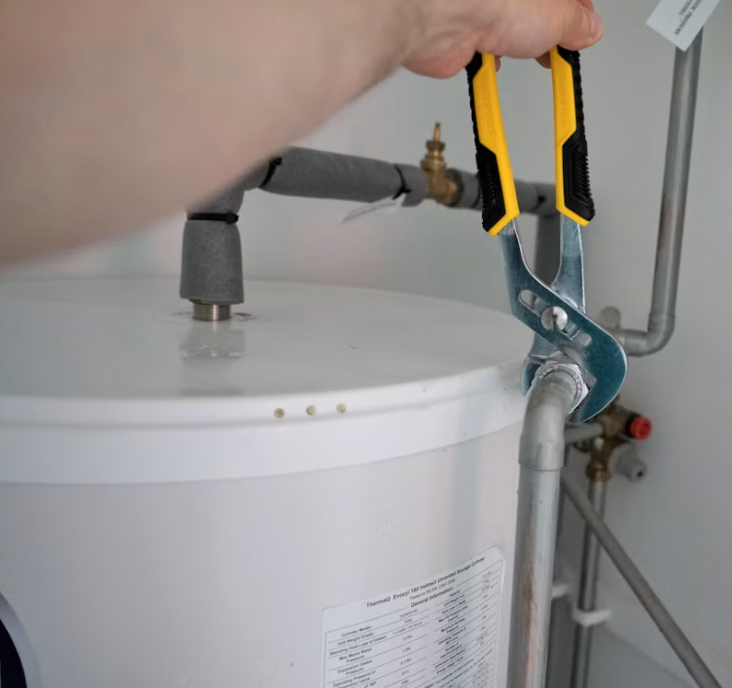
The technician shuts off the heat source and water, relieves pressure, and works loose the hex head at the top of the tank — often the hardest part after a decade of sitting. Some tanks build the anode into the hot outlet fitting, which changes the approach slightly. The new rod goes in with fresh thread sealant, then the tank refills and gets checked for leaks.
Low clearance above the tank? A segmented rod solves that without relocating the heater.
Does It Still Make Sense on an Older Tank?
On a unit under about eight years old with no visible tank corrosion — yes, it's cheap insurance. On a twelve-year-old tank already rusting at the fittings or base, the protection arrives too late, and that money is usually better put toward replacement. A quick look at the rod and tank tells a pro which situation applies to you.
Other Water Heater Services
Water Heater Maintenance
Bundle anode checks with annual service.
Water Heater Flush
Sediment removal at the same visit.
Tank Water Heaters
How storage tanks are built.
Neighborhoods Around Plano We Reach
Anode rod service is available across Plano and nearby communities.
Questions Plano Homeowners Ask Us
What does an anode rod actually do?
It corrodes in place of the tank. As the more reactive metal, it draws the corrosion that would otherwise attack exposed steel inside the water heater.
How often should it be replaced?
Check around year three, then every two to three years after. Actual replacement usually lands somewhere between three and five years, sooner with softened water.
Can I inspect the anode rod myself?
It's possible, but the rod is often seized in place and needs significant torque plus proper draining. Many homeowners fold this into annual service instead.
Why does my hot water smell like rotten eggs?
Usually a reaction between a magnesium anode and sulfate-reducing bacteria in the water. An aluminum/zinc rod frequently clears it up.
Does swapping the anode rod really extend tank life?
It's one of the few maintenance items with a direct link to tank longevity, since a depleted rod means the tank shell itself starts corroding next.
Do tankless units have anode rods?
Most don't, since there's no storage tank to protect. A few hybrid designs do; descaling is the equivalent maintenance task for on-demand units.
Tell Us What's Going On
A short description of your home and your current unit is enough to get a no-obligation quote started.
Not sure what's wrong? Pick Not Sure on the form below and describe the symptoms as best you can — plenty of homeowners are troubleshooting a water heater for the first time.
Get Your Free Water Heater Quote
Tell us what you need and we will call you back — no cost, no commitment.