
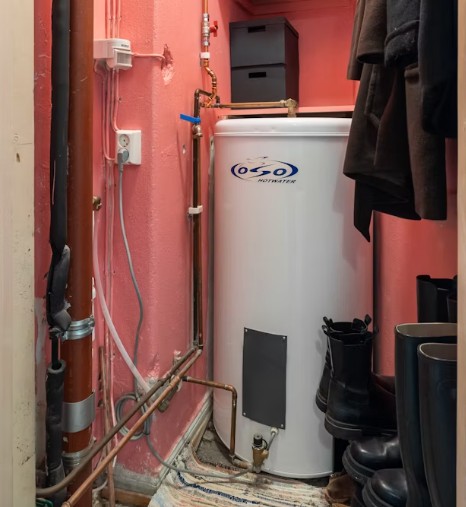
Water heater replacement Plano tx
Fast water heater replacement in plano, tx available with upfront pricing. Often same-day service available. Call us and schedule service
- Water heater replacement
- Water heater installation
- Water heater repair
- Tankless water heaters
- Gas water heaters
- Electric water heaters
Get Your Free Water Heater Quote
Tell us what you need and we will call you back — no cost, no commitment.
Water heater replacement Plano TX
Most Plano homeowners only think hard about their water heater twice: when it's installed, and when it fails. Here's the information that actually helps with the second one.
Signs your tank is on borrowed time
| What you notice | What it usually means |
|---|---|
| Unit is 8–12 years old | Check the serial number on the rating plate — it encodes the manufacture date. Past ten years, plan ahead rather than wait for failure. |
| Second or third repair in two years | You're paying to keep an aging unit limping along instead of putting that money toward a replacement. |
| Water pooling at the base | A drip at a valve is often fixable. Moisture coming from the tank shell itself is not. |
| Rust-colored hot water | The internal glass lining has failed and corrosion is underway. |
| No hot water at all | Gas units: often the pilot assembly or gas control. Electric: usually a failed element or tripped high-limit switch. |
| Temperature swings between hot and lukewarm | A drifting thermostat, sediment buildup, or a tank too small for current household demand. |
| Gas or electric bill creeping up | Sediment insulates the burner or element from the water, forcing it to run longer to do the same job. |
Picking the replacement
Tank vs. tankless. A storage tank holds 40 to 75 gallons ready to go and is nearly always the simplest, lowest-cost swap. A tankless water heater heats water as it flows, never runs dry, and clears floor space, but it usually calls for new venting and a larger gas supply line.
Gas vs. electric. Homes already piped for a gas water heater typically stay with gas — it's the path of least resistance. Electric models go in almost anywhere since there's no flue to route, and heat-pump versions can meaningfully cut energy use where the garage or utility space allows for one.
Sizing. Peak demand matters more than headcount. A household running two showers and a dishwasher back-to-back at 7 a.m. needs a higher first-hour rating than a similar-sized household that spreads usage out. Tankless sizing also has to account for how cold the incoming water runs in a North Texas winter.
What the swap actually involves
A technician confirms fuel type, capacity and venting requirements, shuts down and drains the failing unit, disconnects and removes it, sets the new heater, ties in fresh supply and relief-valve discharge lines, checks draft on gas models, purges air from the lines, sets the thermostat (commonly 120°F), and hauls away the old tank. More detail lives on the installation page.
Every Water Heater Service We Field Requests For
Whatever's going on with your hot water — a simple swap or something more urgent — it likely falls into one of these categories.
Water Heater Installation
Tank, tankless, gas and electric systems chosen around how much hot water your household actually uses, then set, piped, vented and pressure-checked so the first shower after the crew leaves behaves exactly the way it should.
See water heater installation details →Water Heater Repair
Cold showers, banging tanks, a burner that will not stay lit or a thermostat that drifts — each one gets traced to its actual cause, with a plain answer about whether the fix is worth it on a unit of that age.
See water heater repair details →Commercial Water Heater Installation
Hot water plants built around a business's busiest hour: capacity planning, backup units so one failure does not close the doors, clean equipment access, and a staged start-up that proves output before the job is signed off.
See commercial water heater installation details →Commercial Water Heater Repair
Restaurants, salons, gyms and apartment buildings get the failure isolated fast — storage tanks, tankless racks, control boards, mixing valves and recirculation loops — so service resumes with the least interruption possible.
See commercial water heater repair details →Tankless Water Heater
On-demand heating sized against winter inlet temperatures and real simultaneous use, installed with the gas or electrical capacity, venting and service valves it needs, plus the descaling that keeps flow rates from sliding.
See tankless water heater details →Gas Water Heater
Natural-gas units handled with the venting, draft, gas-line capacity and combustion-air details that decide whether the heater runs safely and quietly in a garage, closet or utility room — not just whether it fits.
See gas water heater details →Electric Water Heater
Standard resistance and heat-pump models installed or repaired with the breaker, wiring, element and condensate work spelled out ahead of time, so the panel and the space can genuinely support the unit you pick.
See electric water heater details →Tank Water Heater
Storage heaters from 40 to 75-plus gallons matched to first-hour demand, recovery speed and the space you have, with candid sizing advice so back-to-back showers and a laundry load never end in cold water.
See tank water heater details →Emergency Water Heater Service
A tank dumping water or a house with no hot water at all gets immediate shutoff guidance, help limiting damage, and a fast read on whether this unit is worth saving or should be replaced now.
See emergency water heater service details →Water Heater Maintenance
Scheduled service — flushing, anode and valve checks, burner and combustion inspection — that keeps efficiency from quietly slipping and surfaces small faults while they are still cheap to correct.
See water heater maintenance details →Water Heater Leak Repair
Find out exactly where the water is coming from: a fitting, the drain valve, the relief line, or the tank shell itself — the one answer that decides whether a repair holds or the heater is finished.
See water heater leak repair details →Water Heater Flush
Draining out the mineral layer behind rumbling noises, slow reheating and rising bills, protecting the tank bottom and the elements from the overheating that shortens a heater's life.
See water heater flush details →Anode Rod Replacement
Checking and swapping the sacrificial rod before corrosion reaches steel — one of the few low-cost services that genuinely buys extra years on a tank that is still in good shape.
See anode rod replacement details →
Gallery
Getting Your Home Ready Before the Crew Arrives
A few minutes of prep can shave real time off the visit and keep floors clean in the process. Clear a walking path from the driveway to wherever the heater lives, move stored bins, bikes or laundry baskets out of the way, and confirm the water, gas and electrical shutoffs are reachable and not blocked by shelving. Attic installations in particular need a clear run to the access hatch — that's where tight timelines get lost.
Lay down towels or a drop cloth along the removal path, especially if the failing unit has been leaking or has sediment sitting in the bottom. Keep pets and kids in another part of the house during the swap, and flag any HOA or parking rules that might affect where a service vehicle can park. Ask about any of this when you request a quote and we'll walk you through what to have ready.
Permits, Code and Utilities in Plano
Most water heater replacements and new installs in Plano need a plumbing permit and inspection through the City of Plano Building Inspections Department — or the relevant Collin or Denton County office for addresses outside city limits. Installations follow the plumbing, mechanical, fuel-gas and electrical codes the city has adopted, along with Texas State Board of Plumbing Examiners licensing rules. Gas service in the area is generally provided by Atmos Energy and electric service by Oncor, so it's worth confirming meter capacity, gas-line size or circuit availability before switching fuel types.
- Correctly routed temperature-and-pressure relief discharge line
- Accessible shutoff valve
- Proper venting and combustion air for gas equipment
- Correct electrical disconnect and circuit sizing
- Drain pan where a leak could damage the structure below
- Thermal-expansion control on closed plumbing systems
A change in fuel, location or equipment type usually adds gas-line, venting, condensate or electrical scope. See the installation process for more, or request a quote so someone can look at your specific setup.
Why Plano's Water Is Hard on Water Heaters
Plano draws its drinking water from the North Texas Municipal Water District, blended with Dallas supply, and it lands on the moderately hard side — roughly 7 to 11 grains per gallon in most parts of town. Every gallon that gets heated leaves calcium and magnesium behind, and that mineral layer builds up on tank bottoms, electric elements and tankless heat exchangers over time. The results are familiar to a lot of local homeowners: popping or rumbling sounds, slower recovery, less usable hot water, and tankless units throwing error codes more often than they should.
There's no single maintenance interval that fits every house — it depends on the equipment and how hard your particular water runs. Tank systems benefit from a periodic flush and a working relief valve; older tanks are worth checking with an anode rod inspection. Tankless systems need accessible isolation valves for descaling on a regular basis. Full details are on the maintenance page.
Sizing for North Texas Weather
Warm incoming water for most of the year makes tankless flow ratings look great on paper — until a winter cold snap changes the math. When groundwater temperature drops into the 50s, a tankless unit has to work harder to hit the same output temperature, and its usable flow rate falls. Size against the winter column of the spec sheet, not the summer number, and account for how often showers, laundry and dishwashing overlap in your household.
Attic installs deserve special attention here. A large number of Plano homes — especially the west-side subdivisions built in the '80s and '90s — keep the water heater up in the attic, where a failed tank drains straight into the ceiling below. That makes the drain pan, secondary line and its routing just as important as the heater itself. February 2021's hard freeze is still a useful reminder locally: unprotected supply lines, relief-valve discharge piping and condensate drains in unconditioned attics and garages are all exposed when temperatures crash. Compare tank and tankless options before deciding.
Across Plano's Neighborhoods
A 1960s ranch house near 14th Street doesn't have the same access or venting situation as a two-story build in Deerfield or Hunters Glen, and a townhome near Legacy West is different again. We've seen requests come in from Historic Downtown Plano, Willow Bend, Legacy West, Prestonwood, Russell Creek, Ridgeview and the Shoemaker & Hard area, along with condos and mixed-use buildings closer to the Legacy corridor — each with its own quirks around capacity, clearance and venting.
Requests are also welcomed from nearby DFW-area communities, including Frisco, McKinney, Allen, Richardson, Garland and Wylie.
Brands You'll See and What Actually Drives Cost
Bradford White, Rheem, A. O. Smith, State, Rinnai, Noritz, Navien and Takagi are among the brands commonly stocked around the Plano area, split between plumbing supply houses and home-improvement retailers. Sizing accuracy, parts availability, warranty terms and an install done to spec matter more than the logo on the tank.
What actually moves a Plano quote: capacity and efficiency rating, fuel type, whether gas-line or circuit work is needed, access conditions, permit and inspection fees, expansion and drain-pan requirements, any recirculation work, disposal, and whether it's an after-hours call. A straight tank swap is naturally cheaper than a relocation or a tankless conversion. When comparing bids, make sure each one covers the same scope and code items. Request a quote built around your home.
Housing Stock and Installation Access
East Plano still has a good number of 1960s and '70s ranch homes, while west Plano leans toward larger two-story houses from the '90s and 2000s, plus condos, townhomes and newer high-density buildings near Legacy West. Existing units turn up in attics, garages, interior closets, exterior enclosures and shared mechanical rooms — and attic placement in particular limits tank size to whatever fits through the hatch and along the walkway, with a sound drain pan and pan line non-negotiable.
Older properties sometimes need vent, shutoff, connector, electrical or pan updates alongside the swap itself. A remodel or an added accessory dwelling unit can also push demand high enough to justify a bigger tank, a higher first-hour rating, a look at the existing gas setup, or a switch to an electric heat-pump model. Multifamily and mixed-use buildings are often better served with dedicated or redundant commercial systems.
Tank or Tankless, Side by Side
| Tank water heater | Tankless water heater | |
|---|---|---|
| Capacity | Fixed at 40–75 gallons, then it must recover | Continuous, capped by flow rate rather than volume |
| Standby loss | Keeps a full tank hot around the clock | None — only heats while water is running |
| Install complexity | Usually reuses existing connections | Often needs new venting, a bigger gas line, condensate drain |
| Upkeep | Periodic flush, occasional anode check | Annual descaling given local water hardness |
| Upfront cost | Lower for whole-home hot water | Higher equipment and labor cost |
| Good fit for | Households the current setup already handles fine | Homes that keep running out of hot water or need the floor space back |
Read further on tank water heaters and tankless water heaters.
Where We Take Requests
Homeowners across Plano and the surrounding DFW metroplex can request a local water heater professional through this site.
Frisco, TX
Water heater replacement, installation and repair help for Frisco homeowners.
McKinney, TX
Water heater replacement, installation and repair help for McKinney homeowners.
Allen, TX
Water heater replacement, installation and repair help for Allen homeowners.
Richardson, TX
Water heater replacement, installation and repair help for Richardson homeowners.
Garland, TX
Water heater replacement, installation and repair help for Garland homeowners.
Wylie, TX
Water heater replacement, installation and repair help for Wylie homeowners.
Murphy, TX
Water heater replacement, installation and repair help for Murphy homeowners.
Carrollton, TX
Water heater replacement, installation and repair help for Carrollton homeowners.
The Colony, TX
Water heater replacement, installation and repair help for The Colony homeowners.
Addison, TX
Water heater replacement, installation and repair help for Addison homeowners.
Sachse, TX
Water heater replacement, installation and repair help for Sachse homeowners.
Questions Plano Homeowners Ask Before Replacing a Water Heater
How do I know it's time to replace instead of repair?
Age past the ten-year mark, a tank leaking from the body rather than a fitting, rusty hot water, and repeat service calls all point toward replacement. A creeping utility bill and longer waits for hot water are usually the last warning before the tank fails outright.
Tank or tankless for a Plano home?
A tank is the quicker, cheaper swap when the current space, venting and fuel line already fit. Tankless units never run out and free up floor space, but count on venting changes, a bigger gas line or new circuit before install day.
How fast can a replacement happen?
A direct tank-for-tank swap is often finished in a few hours. Anything involving a fuel change, a move to tankless, a relocation, or a permit and inspection typically stretches into a full day or a second visit.
What drives the price?
Tank size and efficiency rating, fuel type, any venting or electrical work, code items like expansion tanks and drain pans, access difficulty, disposal, and permit fees. Because these vary house to house, quotes are built around your specific setup rather than a flat number.
Does the quote cost anything?
No. Filling out the form or calling costs nothing and carries no obligation. You get a clear scope and number to weigh against your own timeline.
Ready to Replace Your Water Heater?
Tell us about your home and current unit, and we'll send back a no-obligation quote.