
Gas or Electric? Answering It for Your Plano Home
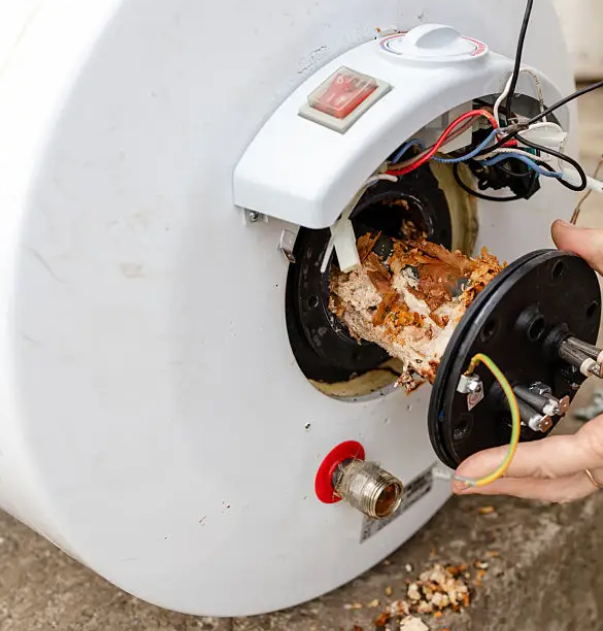
Rather than declaring a winner, work through these five questions about your own home and the fuel choice tends to answer itself.
Question 1: What do you already have?
If your home already has a gas line and vent run to the water heater, staying with gas is almost always the simplest and least expensive path. If it's electric-only, staying with electric avoids adding gas piping and venting from scratch. Switching fuels either direction turns a straightforward swap into a real project — new 240V circuit and panel capacity for gas-to-electric, or gas piping and combustion air for electric-to-gas.
Question 2: What does your utility bill actually look like?
Atmos Energy delivers the gas and Oncor the electricity in most of Plano, and both price seasonally. As a rule of thumb, a standard gas tank runs cheaper month to month than a resistance electric tank, and a heat-pump electric tank — which moves heat from the air rather than generating it directly — is usually the cheapest of all to operate. If you're on a time-of-use electric plan, a schedulable electric unit can shift most of its heating to off-peak hours.
Question 3: How fast do you need recovery?
Gas recovers roughly twice as fast as standard resistance electric, which is why a 40-gallon gas tank and a 50-gallon electric tank are often treated as equivalents for the same household. Heat-pump units recover more slowly still in efficiency mode and are typically sized a notch larger — say a 65- or 80-gallon heat-pump tank in place of a 50-gallon gas unit — to cover the same household comfortably.
Question 4: Where does the unit sit?
A heat-pump water heater needs a reasonable volume of air to draw warmth from, which makes an unconditioned Plano garage in July an asset rather than a liability — the same heat that stresses a gas control valve is free energy for a heat pump. That same garage in January is a poor spot for one, since the unit works harder in cold ambient air. A closet or small utility room is usually the wrong location for a heat pump because of fan noise and limited air volume; it's a non-issue in an open garage.
Question 5: What happens to your venting or wiring if you switch?
Older Plano homes sometimes have flues sized for older equipment, or a heater tucked in a closet without adequate combustion air — worth checking before assuming a gas replacement is a simple swap. On the electric side, confirm panel capacity and circuit availability before counting on a heat-pump or standard electric upgrade.
Putting it together
- Keep gas if you already have it, want the lowest upfront cost, and venting checks out.
- Keep standard electric if there's no gas service and usage is moderate.
- Go heat-pump electric if the unit lives in a garage or open utility space with a condensate path, and long-term operating cost matters most.
- Switch fuels only when there's a specific reason — a planned panel upgrade, no gas at the property, or a long-term savings goal that justifies the conversion cost.
Send a photo of your current setup through our free quote form and we'll price the sensible options side by side for your address, including a heat-pump comparison where it applies. See also our guide on tank vs. tankless if you're also weighing a switch to on-demand.
More From the Blog
- Water Heater Replacement Cost: A Plano Buyer's Checklist
- Repair or Replace? A Plano Homeowner's Decision Guide
- Tank vs. Tankless in Plano: Side-by-Side Comparison
- Water Heater Sizing: A Plano Q&A
- How Long Will My Water Heater Last? A Plano Timeline
- Water Heater Leaking? Follow This Order of Operations
Get a Free Water Heater Quote
Describe your water heater situation and we will send you a quote with no obligation.
Get Your Free Water Heater Quote
Tell us what you need and we will call you back — no cost, no commitment.